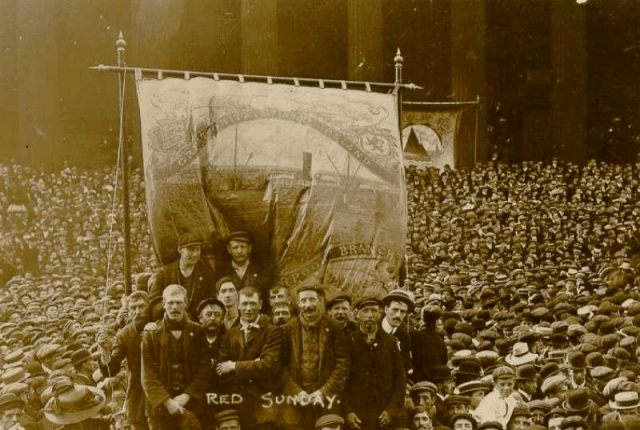
Churchillian tactics used against working-class citizens in the UK in 2026.
This article examines the recent 2026 protests in Ireland, drawing a direct parallel between the modern treatment of working-class citizens and the Red Sunday of the 1911 Liverpool general transport strike.
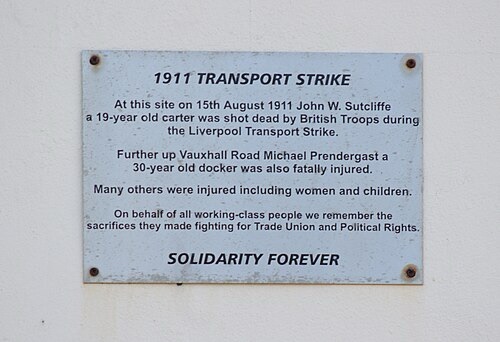
In 1911, as dockers, sailors and railway workers attended the workers’ strike in Liverpool, Winston Churchill, then Home Secretary, dispatched gunboats down the Mersey, resulting in two deaths and over 350 injuries. This history is not just academic to me; it is ancestral. My own family is a blend of Scouse, Russian, and Irish roots. My grandad Jim, James Shannon, served as a P.T.I. in the Irish Guards before becoming a docker on the Liverpool Docks. His legacy and the broader struggle for workers’ rights, fueled my passion for this subject and shaped my university studies.
As a Liverpudlian, I cannot help but see the draconian ghost of 1911 in the Irish government’s 2026 response. The threat of military aggression during civil disputes and the aggressive policing of peaceful blockades, hold a mirror to the suppression tactics used over a century ago. Literally during my Grandad’s era.
There is a creepy irony in our timeline of ‘progress.’ We track our history through the lenses of the First, Second, Third and now Fourth Industrial Revolutions – as if they were milestones of civilian achievement. Yet, since 1911, states have been at war or engaged in military conflict every single year for over a century. We seem to have mastered the art of innovation, moving from the steam of the 1800s to the AI of 2026, but we never mastered the art of peace. Whether it is deploying gunboats in 1911 or using military recovery vehicles to break fuel blockades today, the state’s primary ‘innovation’ has always been the refinement of suppression against citizens home and abroad.
We are told we have progressed. History labels the First Industrial Revolution as ending around 1840, the Second spanning 1870 to 1914, and the Third, the digital revolution, beginning around 1969. These dates outline our rapid transitions in manufacturing and innovation, proving that as one revolution ends, another immediately takes its place. Yet, while our technology and industry are constantly reforming, the state’s response to the workers who power them has remained stubbornly stagnant. Despite the progression through four industrial revolutions, the force used by state remains a permanent fixture. While 1911 was about the Second Industrial Revolution, 2026 represents the Fourth Revolution in reference to AI and super-intelligence.
In 2026, just as in 1911, the government’s reaction to those challenging the status quo remains rooted in force rather than reform. Throughout all four revolutions, the government’s basic default is always force over negotiation. The Spectator recently discussed the Irish government’s response to fuel protestors, stating how attempts to diffuse should have been exhausted, but instead, they were met with the army.
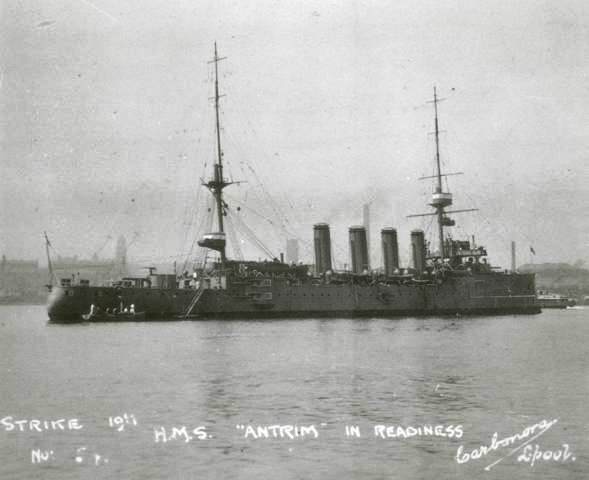
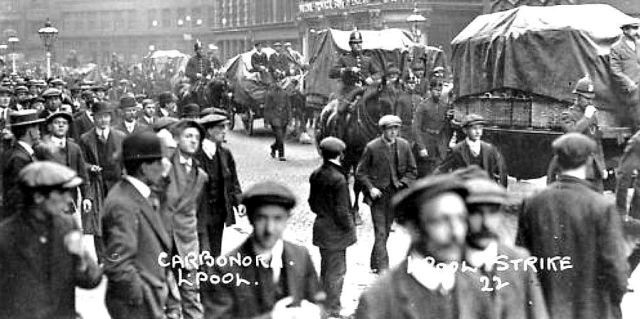
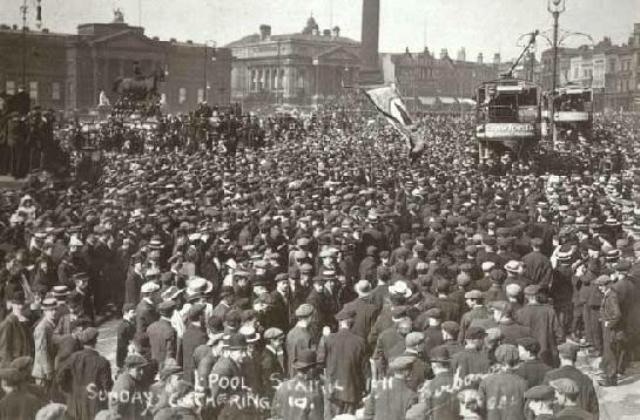
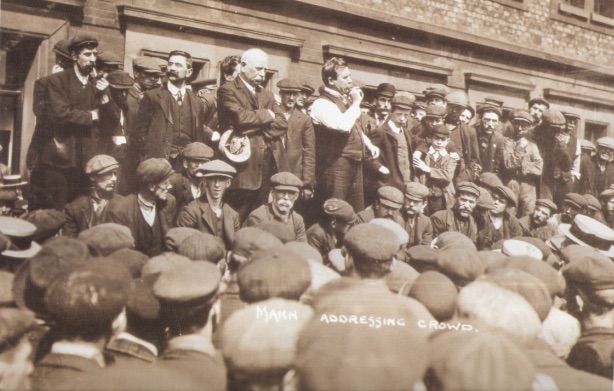
In 1911, 80,000 people attended a rally at St. Georges Plateau lead by Tom Mann, Chairman of the Strike Committee. Tom Mann, called a general strike after over 3,000 troops were deployed to Liverpool. Factories were shut down, an estimated 250,000 people were on strike and Winston Churchill sent in troops and the cruiser, HMS Antrim, to station itself in the River Mersey to break the strike. Liverpool’s Head Constable, Leonard Dunning, was granted permission to draft assistance from neighbouring police forces, such as Birmingham, Bradford, Lancashire and Ireland. On Sunday 13th August 1911, now known as ‘Red Sunday or ‘Bloody Sunday’, Tom Mann spoke to the crowd,
“A hundred thousand people have come to the centre of Liverpool this afternoon. The authorities have allowed us to ‘police’ this hundred thousand ourselves. Why? Because they enjoy surrendering their power? Or because they’re afraid of being trampled underfoot. There’s a thin line between order and chaos. The police force of Liverpool may tread it this afternoon. A step wrong and the Mersey will rise a foot by nightfall, with largely innocent blood. We’re gathered here today, peacefully, to demonstrate our determination to win this long and terrible battle against the employing classes and the state. What does that mean? Only this. All the transport workers of Liverpool are arm-in-arm against the enemy class. We have sent a letter to the employers asking for an early settlement and a speedy return to work. If that brings no reply, if they ignore us, The Strike Committee advises a general strike. In the face of the military and the police drafted into this city – and of the threat to bring gunboats into the Mersey – we can see nothing except a challenge. A challenge to every worker who values his job. A challenge to every claim each worker makes of his employer. A challenge to every right a worker should expect under common decency. Brothers, we rise to this challenge. And we meet it, head on.”.
As tensions with the police heightened, the Head Constable had numerous police officers from Birmingham and Leeds concealed inside St. George’s Hall together with 100 soldiers. As soon as the violence started, police emerged from inside St. George’s Hall with batons and charged the crowd, the Mounted Department also charged the crowd. While the steps of St. George’s Hall were cleared, but many people were injured, Stuart Deacon, stipendiary magistrate, appeared on the plateau surrounded by troops. He then read the riot act to the crowd:
“Our sovereign Lord the King chargeth and commandeth all persons, being assembled, immediately to disperse themselves, and peaceably to depart to their habitations, or to their lawful business, upon the pains contained in the act made in the first year of King George, for preventing tumults and riotous assemblies. God save the King.”
In a speech given by Mann, the ruling class “saw that there was a power in the hands of the workers they had never dreamed of. Solidarity had truly worked wonders, and many of the capitalists thought that already the social revolution was upon them”.
Meanwhile, King George V urged that strikes should be banned, if that was not possible at the very least that picketing should be outlawed. He also urged the government to give the military a “free hand” to teach “the mob” a lesson. Hansard confirms that Secretary of State, Churchill, called the protestors “mostly from the hooligan class” and when replying to William Byles’ question,
“Can the right hon. Gentleman say whether the presence of the military in Liverpool has not already caused provocation and exasperation to the people in some respects?”
Churchill answered,
“I believe that to be altogether untrue. I believe that the presence of the military has averted even more serious trouble than there has been”.
Whose response does that remind you of?
Protestors won improved pay conditions and union membership across Liverpool increased dramatically. Socialist Worker have a great, in-depth article, ‘1911-when workers took control of Liverpool’, that revisits the strike as ‘the highest points of class struggle’. You can read it here.
The draconian comparison I draw isn’t hyperbole, it is a reflection of the events unfolding in Ireland today. April has shown us nationwide fuel protests led by farmers, hauliers and other workers, due to the fact of soaring fuel prices because of the ongoing conflict in the Middle East (that nobody wants or voted for, btw).
The government’s response has been chillingly familiar. By 9 April 2026, ‘Justice’ Minister, Jim O’Callaghan, authorised the Irish Defence Forces to use recovery trucks to clear blockades. They were then deployed to assist Gardaí in ‘breaking’ blockades at critical sites like the Whitegate Oil Refinery in Cork and Galway Port. We’ve seen pepper spray used on peaceful blockaders, including reports of a 14-year-old boy caught in the crossfire at the Whitegate site. A video posted on TikTok by Mediadigital (@123media.tv) taken from a screen recording of Instagram live (@Welby003) from 2 days ago in Galway, shows protestors gathered round another, who was singing on a microphone and playing the guitar. Another video posted 2 days ago by TikTok user @misswendywoowookennedy0 with the caption “We are singing again Forces are pushing us back. Whitegate” and the Irish flag, shows a group of men singing to a wall of garda officers. Peaceful protestors who are singing and gathering in comradery, met with police and military with riot shields, batons, pepper spray and use of force.
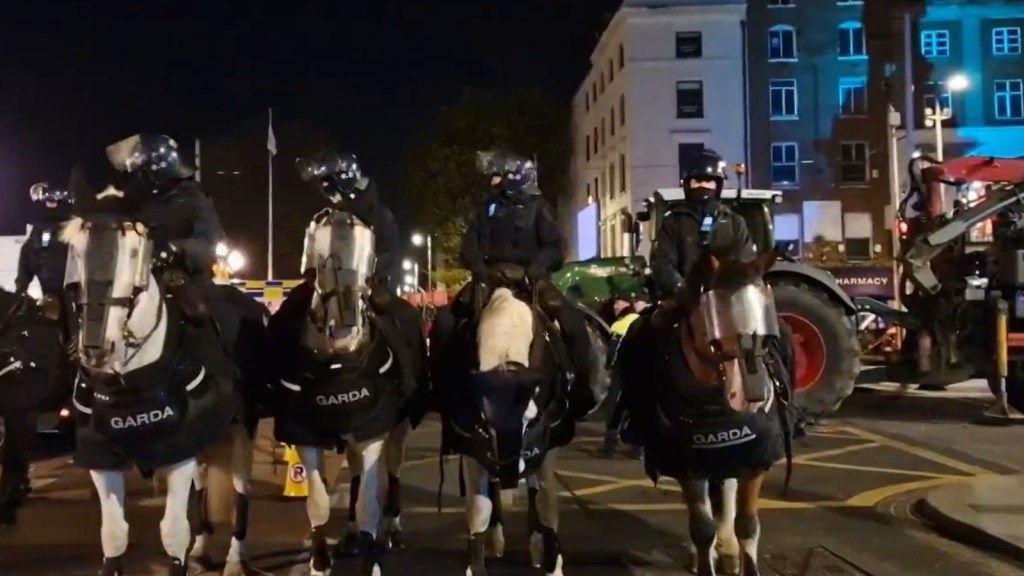
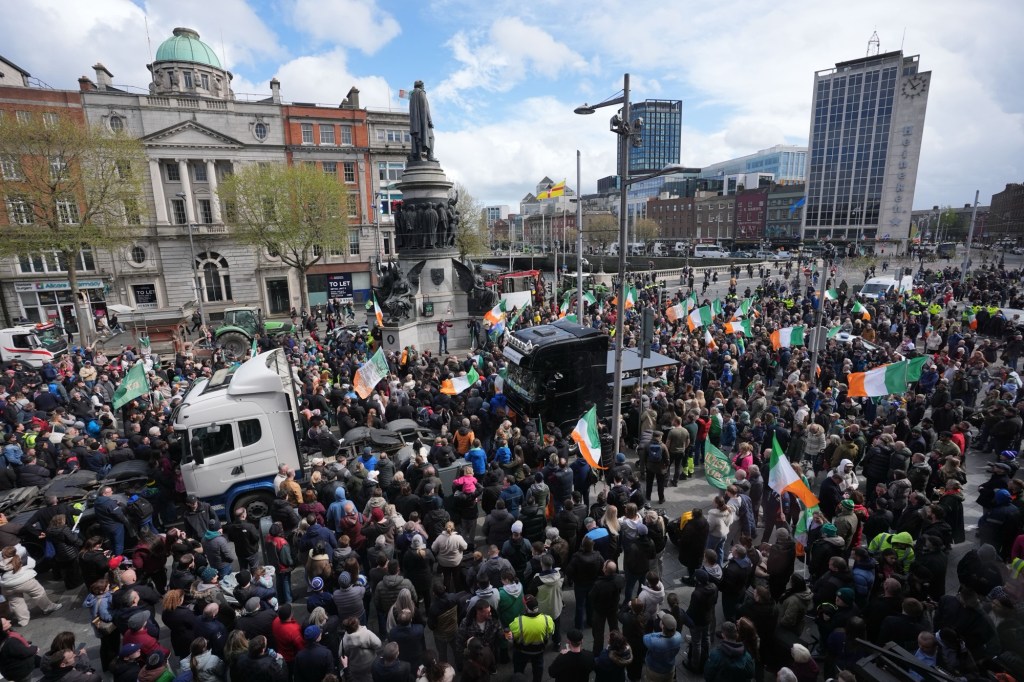
When Taoiseach Micheál Martin labels these actions as “national sabotage”, threatens legal consequences that will follow citizens for years and insisting that the government would not meet any of the protestors, he is using the same playbook Churchill used a century ago. Then, it was gunboats; today, it is military recovery vehicles and high-tech surveillance. Yes, the technology has changed, but the intent to intimidate the working class into silence remains identical. Garda Commissioner, Justin Kelly, stated he would step up enforcement against fuel-cost protesters “endangering the state” and “we gave the blockaders fair warning that we were moving to enforcement and they choose to ignore it and continue to hold the country to ransom.”. Considering the fact that the protestors planned the protests and informed the relevant bodies in advance, is just a slap in the face to the truth and experience of those on the front lines of this. The Independent reported on the Commissioner’s comments, when asked if gardai encountered co-operation at Whitegate oil refinery, he stated, “I certainly would not view the actions of the people, the blockaders in Whitegate as co-operation.”. I am sure the workers and protestors would say the exact same thing about you, Justin Kelly, and Micheál Martin, who stated the government would not even meet with their citizens. What exactly have you done to meet your people half way? Absolutely nothing. Calling it ‘national sabotage’ enlightens us as to how the modern state still views worker resistance as a threat to the nation, rather than exactly what it is, a plea for survival.
Meetings held by the Irish government and ‘established national representatives’ held talks that concluded with a “substantial” package which includes a temporary support scheme and fuel support to those “most impacted” by rising fuel costs. They will also be postponing an increase on carbon tax and will announce a fuel subsidy scheme for farmers and fisheries. Also, there will be a 10 cent reduction per litre on both diesel and petrol, as well as a 2.4 cent reduction per litre on marked gas/oil.

Considering the fact that analysis from The Guardian taken from official data shows that fuel prices have risen faster in Northern Ireland than in any other U.K. region, since the beginning of the Iran war. The price of petrol has risen by 19% in Northern Ireland since the end of February, with diesel being 35% more expensive. What does this look like price wise? Filling a 50-litre tank cost an average of £75 for petrol and £91 for diesel at the beginning of April. Compared to £63 for petrol and £67 for diesel on 28 February, the day the US & Israel began airstrikes on Iran began. As of now, a motion of no confidence has been tabled over the Irish governments response to the fuel protestors last week. As reported by The Independent, “Sinn Féin finance spokesperson Pearse Doherty criticised the government for “laughable” measures announced on Sunday, the government’s second response to fuel price rises caused by the US and Israeli war in Iran. Again, they come up short, and that’s why so many people are annoyed this morning,”.
As the Irish government moved to break fuel blockades with the same cold efficiency that Churchill’s gunboats once patrolled the Mersey, we ask ourselves: what has actually changed?
History shows us a disturbing pattern. This permanent state of war has and is not just directed outward, it is consistently turned inward against the very people who power the revolutions, as the advancement of the state always outpaces the protections of the worker. New tech comes first and unforeseen protections needed are then strengthened in courts.
Whilst studying for my two degrees, I sought a deeper understanding of power struggles and why the struggle for workers’ rights feels like a circular battle and never-ending story: not directly understanding that the answer lied close to home the entire time, in the mirror held up by the gun boats of 1911. History repeats itself. Whether it is 1911 or 2026, the government’s reflex remains draconian because it values the flow of industry over the lives of its citizens. Coal may have been traded for data, bayonets for high-tech surveillance… but the fundamental struggle remains.
Until the cycle of responding to civil desperation with military aggression is broken, we are not living through any new revolutions. Simply the repetition of an old, violent history. For the dockers of 1911 in Liverpool, and for the protesters in Ireland in 2026, the fight for dignity is the only thing that hasn’t changed.
Up the working class!


Leave a Reply