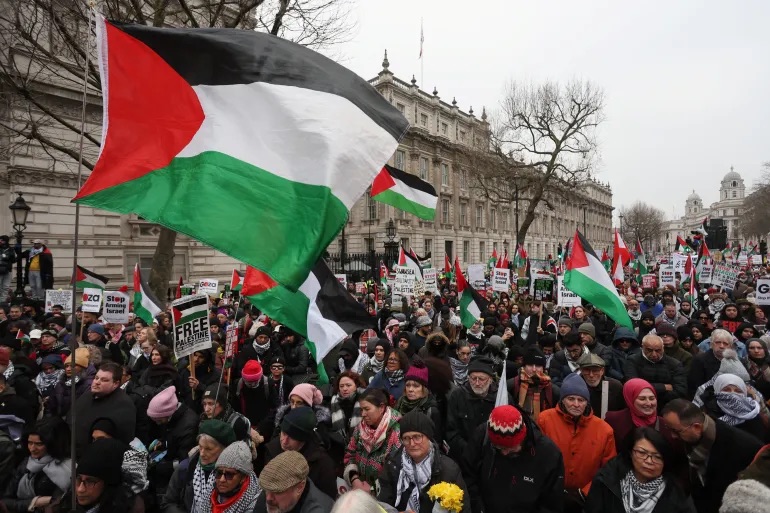
A fundamental freedom is seemingly being treated as trivial by MPs: now, they are turning a guaranteed right into a privilege granted by the state, despite the human right to protest being inalienable and inherent to all. You can see how your MP voted here.
On Tuesday, MP’s voted to further erode our right to protest. This follows previous governments already limiting the scope of dissent in the U.K., such as the Tories criminalising the disruption of national infrastructure and introducing new measures to ban individuals from certain areas. According to Gov.uk, new powers also allow “an inspector to designate a “locality” as a “no-mask zone” for up to 48 hours”. This is despite pre-existing police powers under Section 60AA Of the Criminal Justice and Public Order Act 1994, which already required the removal of face coverings if they were suspected they were hiding their identity to commit a crime. When you consider these new mandates alongside the massive cameras police can sometimes carry at demonstrations and other gatherings, the threat to anonymity in the age of surveillance capitalism, and by extension, the freedom to protest, is extremely clear to see.
The current Labour government has proven no better, having unlawfully proscribed the direct action group Palestine Action. This seen the arrest of peaceful protestors and arrests of hundreds, for simply holding signs that read “Palestine” and “action”. The High Court recently ruled the decision to be unlawful as the group had not crossed the “very high bar” to be labelled as terrorist and that it was disproportionate with human rights. The group remains banned due to the government appealing this decision.
The Crime & Policing Bill recently returned to the Commons, introduces a vague definition of “cumulative disruption” that effectively allows the police to ban “repeat” protests and allows the criminalisation of sustained strike action. This marks a full-scale switch from policing actions, to policing speech, association and assembly. Let’s not dance around the fact that this creates a “first-come, first-served” lacksy-daisy and careless attitude towards our rights guaranteed by the Human Rights Act 1998 (HRA). It is an unforgivable move for the Labour government to impede Article 11 and Article 10 of HRA, abandoning the very values upon which the Labour movement was built.
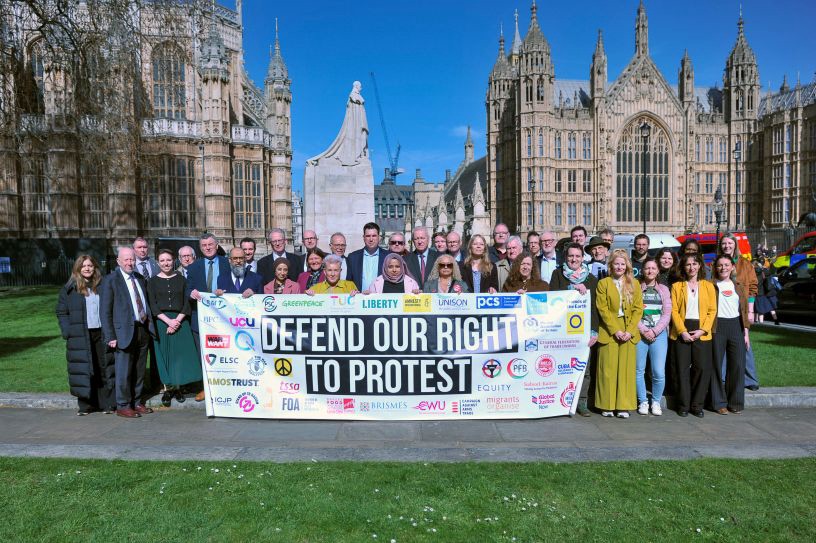
A joint letter, coordinated by Quakers and signed by Bishop Mike Royal, Rabbi Gabriel Kanter-Webber, Lord Indarjit Singh and 16 other faith and belief leaders, states that the ‘cumulative impact’ clause is too vague and too broad. Signatories wrote, “It could mean that we are stopped from demonstrating because another protest previously took place in the same area, even if it was on a completely different issue,”. More than 40 civil society groups including the TUC joined forces to oppose this crackdown, yet the government proceeded regardless. This bill builds on the house-of-cards foundations set by the Tories PCSC Act 2022 and the Public Order Act 2023, which saw the introduction of bans on “noisy” protests and the criminalisation of locking on. Let me tell you. Something is vehemently wrong if you are building on something endorsed by the Tories. At this point, I don’t even recognise the Labour Party I was once a member of.
One major note, if your policy sounds even remotely similar to blueprints of the Galactic Empire in Star Wars – let it be known that you are for sure on the wrong side of history.

We cheer for the rebels defying the system against all odds, not the one’s hunting our hero’s.
I spoke with Councillor Chantelle Lunt, a passionate advocate for racial equality and policing reform. In 2022, Chantelle joined “Kill The Bill” protestors outside Old Palace Yard during the debate of the PCSC bill. During her own encounter with police in 2022, she was confronted and challenged by an officer who claimed she was singing, despite the officer being unable to name the specific offence she was committing. Proving, that existing laws were already being used to stifle dissent. She noted to the Liverpool Echo that the encounter highlighted how “extreme” existing laws already are, even before the most recent wave of legislation.
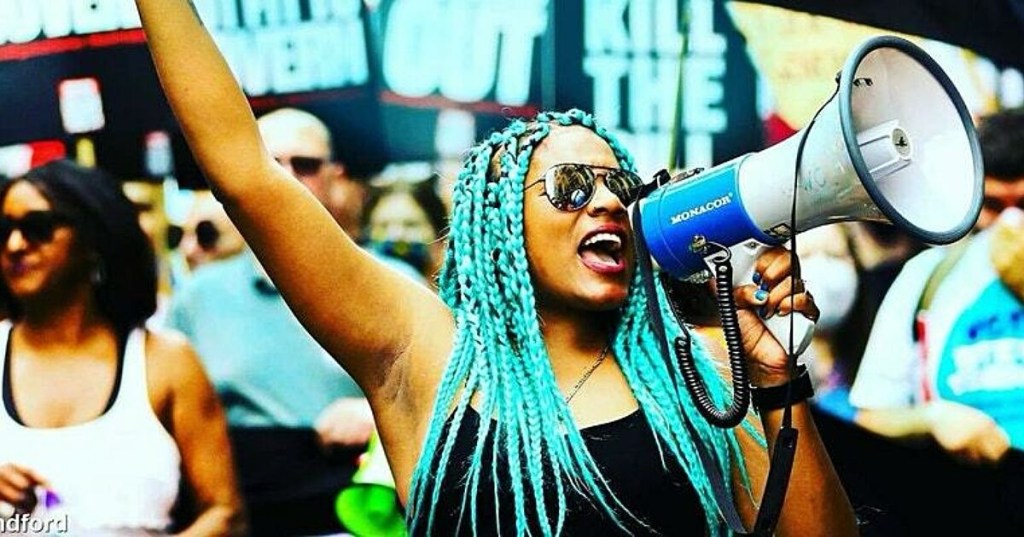
Chantelle is a Green Party Councillor for Knowsley, founder of Merseyside Black Lives Matter Alliance (Merseyside BLM) and Chair’s the Merseyside Alliance for Racial Equality CIC (MARE), a non-profit organisation committed to promoting racial equality across Merseyside through grassroots community-led education and engagement work.
I asked her for her thoughts on the passing of this bill. This is what she said:
“This government is engaging in a coordinated assault on the fundamental pillars of our liberty, substituting meaningful social support with authoritarian control. While they offer families nothing but crumbs in stagnant wages and decimated benefits, they are moving with terrifying speed to dismantle our legal protections.
The further restriction of protest rights, coupled with the chilling move to bypass juries in certain cases, represents a transition toward a state that views dissent as a threat to be managed rather than a right to be protected. As someone who has seen the systemic rot of policing from the inside, I know these powers will not be used neutrally, they will be weaponised against the very communities already marginalised by racial and economic injustice.
By removing the ‘conscience of the community’ the jury, and criminalising the basic act of public assembly, the state is insulating itself from accountability. We are witnessing the infrastructure of a managed democracy, where the poor are expected to suffer in silence while the legal avenues to challenge power are systematically erased. We desperately need a complete dismantling of this carceral logic that prioritises the protection of capital over the lives and voices of the people.”.
Councillor Lunt makes a sobering statement, particularly as she highlights the growing alarm and national backlash against the Court and Tribunals Bill. Clauses 1-7 are proving to be “extremely controversial”, as the government plans to strip away vital legal safeguards for defendants, including the right to choose a jury trial and the automatic right of appeal from magistrates’ courts. Yet another devastating blow to democratic principles, participation and rights within the criminal justice system.
According to Institute for Government, changes mean “around a third of trials that would have taken place in the crown court will happen in magistrates’ court instead: and around a quarter of those still in the crown court will be heard by a judge sitting alone in the Crown Court Bench Division.”. The Criminal Bar Association is “fundamentally opposed to the proposed restrictions on the right to jury trial”, with a survey of criminal barristers showing that around 90% were against the proposals. Even the Criminal Law Solicitors’ Association has raised the possibility of strike action in protest against the reforms, which would cause further backlog in both crown and magistrates’ courts.
If the government is ignoring the public, criminal barristers, solicitors, legal experts in their field, who are they listening to? These measures were notably absent from Labour’s manifesto and completely out of the blue. You cannot run the country on the cheap and water-down fundamental rights, based on assumptions even the government prove to be “highly uncertain”.
This drift from international legislation has not gone unnoticed. In March, The UN special rapporteur on rights to freedom of peaceful assembly, Gina Romero, visited the U.K. Parliament. She says that “Britain is now setting examples of worst practice on protest law”. Whether the government likes it or not, the right to protest is an inalienable right protected by international law. Change in this country and throughout history has never happened through a single, polite march. As the Stop The War Coalition noted in it’s reply to John McDonnell’s statement on X, “Thank you John and Andy McDonald and all the MPs who spoke out in today’s debate against this most authoritarian of measures. Key rights and freedoms were won in this country through cumulative disruption protest. The vote may have been lost, but the govt will not silence us.”.
The erosion of these rights is as transparent as it is dangerous. It is sheer naked corruption. There is no legitimate reason to roll back rights and protections, there are only reasons to strengthen them. The question is, how will these powers be taken advantage of. ‘They have already met once before, now, enough of that’. In the case of an industrial dispute where workers picket for multiple days – will unions be essentially silenced undue the guise of “cumulative disruption”? The potential for abuse is worrying.
If you would like to do some further reading regarding our protest rights, The Human Rights Watch released a 47-page report, “Silencing the Streets: The Right to Protest Under Attack in the UK” which documents the UK Labour governments failure to reverse anti-protest laws introduced by the Conservative government. You can read it here.
The report, based on research in 2024 and 2025, shows that protestors are “increasingly detained, charged, and in some cases sentenced to multi-year prison terms for non–violent actions such as attending planning meetings”.
Special thanks to Councillor Chantelle Lunt for taking the time to reply to my question!


Leave a Reply